

Autumn in Atlanta this year was warmer than usual, making November sunny with comfortably warm days and clear nights. Inspired by the weather, I wandered around the city more than usual, shooting nine rolls in two weeks—a record. When deciding what to shoot, it dawned on me that the only AF camera that saw any action for all of 2025 was the Minolta AF-C. While going through my lenses, I realized there was an AF 28mm f/2.8 that had never been used. I couldn’t recall exactly how it came into my possession. After reviewing my purchases, I discovered it came as part of a set that contained a Maxxum 7 (the reason I bought the set) and five other lenses. While the 28mm FL is not at the top of my list of prime lens needs, I decided to take it for a spin to see how it performed.
As I learned from trying the 24mm f2.8, focal lengths wider than 35mm do not fit easily into how I imagine scenes. Shooting below 35mm feels awkward, although after using the MD Zoom 24-35mm, that discomfort is slowly abating. The issue lies mainly with subjects that are relatively close. Unless subjects at close range are shot head-on, they can easily be distorted. With this caution in mind, I created a list of possible subjects and loaded a Maxxum 70 with Tri-X and a Maxxum 5 with Kodacolor 100 and set out to discover what the day offered.
Background
A Popular Photography ad from 1989 lists the Minolta AF 28mm f2.8 for $99.99. This is 4 years after its 1985 release. According to Dyxum, there is only one version of this lens. However, a more costly AF 28mm f2.0 was released later.


Technical Specs
The minimum focus distance (MFD) is 0.3m (~ 1 foot). It has a 49mm filter size and is a small lens, weighing 185g (6.5 oz) with an integrated hood. The aperture range is 2.8 to 22, formed with seven aperture blades. Dyxum readers give the lens a sharpness rating of 4.23/5, and I agree.
Buying
This is a common lens and usually sells for $50-$75.00 on eBay.
Shooting Experience
The weight and small size of this lens balance well with the Maxxum 5 and Maxxum 70, both of which are lightweight and comparatively small. Autofocus with both cameras was quick, but the Maxxum 70 (loaded with KodaColor 100) seemed to have more trouble focusing.
I tried to go for subjects suitable for a wide-angle lens—buildings, landscapes, etc. As others have said, the lens is sharp with no vignetting from f5.6 on. In terms of sharpness, it only seemed sharp above f/4. Shots taken wide-open at close range were soft—not horribly so, but enough for me not to want to use the lens below f/4.
I’m used to shooting with larger zoom lenses. When I want a 28mm field of view, typically I grab the 28-105mm (not-xi). Thus, the key comparison for me is between this lens and the AF 28-85mm and AF 28-105mm. The 28-85mm has about the same level of sharpness, but is slightly slower, so at 28mm, the AF 28-85mm zoom has no advantage over the prime. However, the 28-105mm, wide open at f/3.5, is much sharper, and the minimal improvement of 1 stop in speed does not compensate for the lack of sharpness wide open.
Images
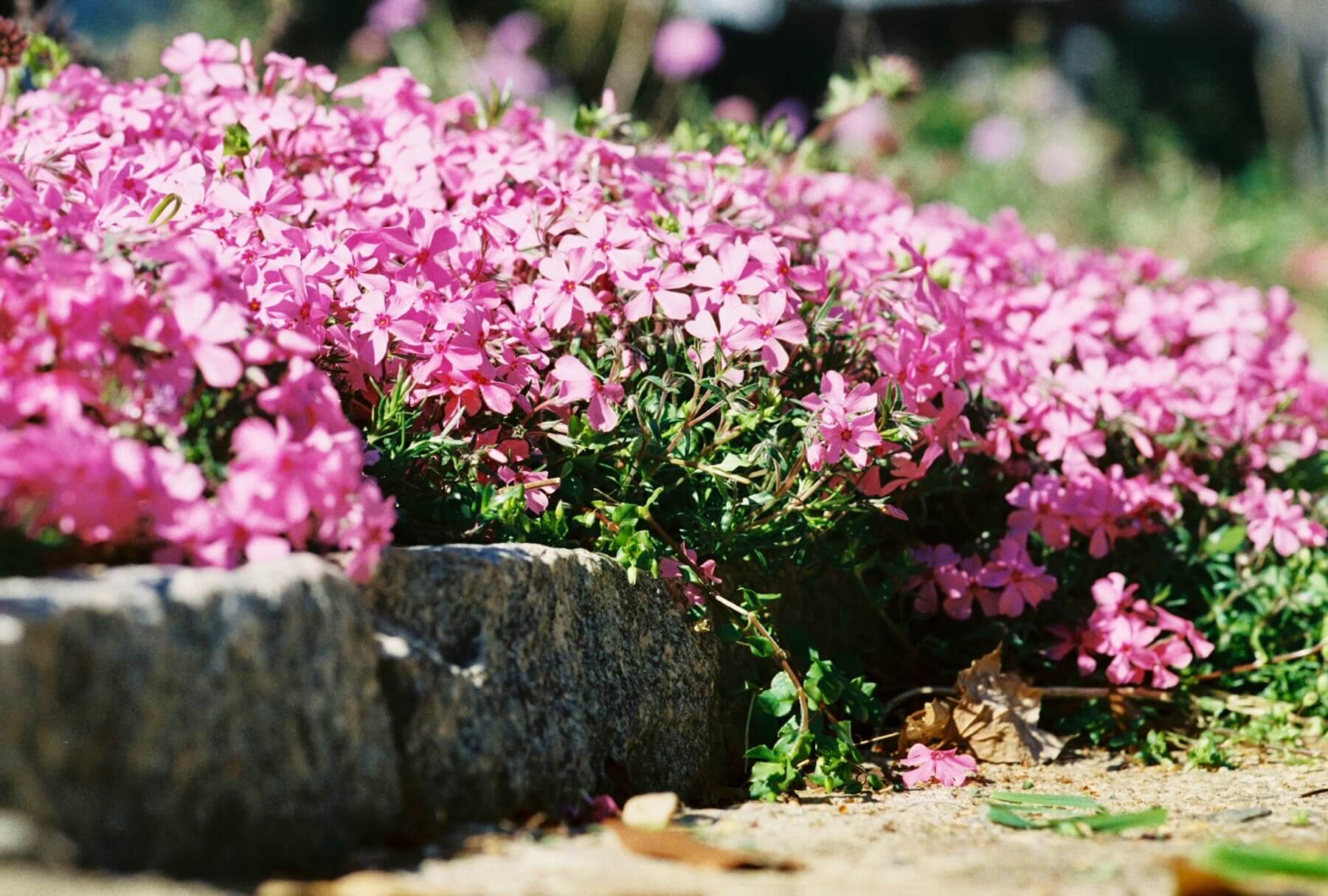
Color images are Kodacolor 100 processed using the CineStill 2-Step Color kit. Black-and-white images are Ultrafine Xtreme developed in CineStill DF96 monobath. All images were scanned using the Epson v600 and Epson Scan 2 software. Color rendition is good, but flaring is noticeable (e.g., Rambler building). Also, a bit of barrel distortion is visible in some shots (e.g., the church).


Impressions
Shot at f5.6 or smaller apertures, the lens performs well, so 400 ISO film or a sunny day are the best bets for sharp images without vignetting. Its small size and light weight make it a good companion to Minolta’s consumer-focused cameras (XTsi, QTsi, 400si, Maxxum 5, Maxxum 70s, etc.). For some reason, I seem to have more trouble with AF on the Maxxum 70 compared to the Maxxum 5. I hope the Maxxum 70 is not about to go on the fritz.
As with the MD Rokkor 24mm f2.8, the 28mm FL requires an adjustment in subject selection and shooting angles. I’m learning to make those adjustments for scenes where these wider fields of view are required. However, at present, if I want to go below the 35mm FL, I have the 28-105mm, which is only one stop slower. And should I ever really need a sub-35mm field of view and a faster lens, the MD Rokkor 24mm f2.8 is an exceptional lens that is readily adapted for digital. Alex Luckyk’s review reinforces my impression of the 28mm f2.8.
Would I recommend it? Well, it’s relatively inexpensive, and when stopped down, it performs adequately. It is at least as sharp as the AF 28-85mm (1985 version) zoom, but much smaller. It is also smaller and much easier to find than the AF 28-105mm. If those properties meet your needs, try one. On the other hand, if the 28mm FL is critical for your photography, then the AF 28mm f/2 is the lens you want.





Nice I have one from my dad
Bought way back in the 80s
Shot from f5.6 on, it does pretty well. I have the 28mm f2, which I’m eager to try.