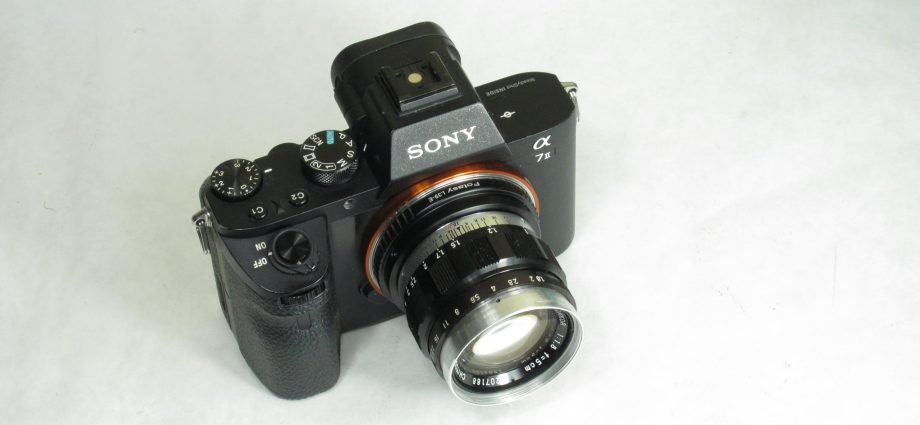
Well, it finally happened—I have a Sony A7 II! This Sony A7 II was the final item on a photography wishlist that I started in 2019. My Olympus 4/3 and m4/3 cameras, which I used mainly to test full-frame lenses, were both cropped (2x) sensors, and their limited field of view made me long for a full-frame camera. Aside from the limitations of using full-frame lenses on cropped-sensor cameras, I could not use any of my Minolta AF lenses with either of the Olympus digitals. The Sony A7 II removes the limitations of cropped sensors and allows the use of Minolta SR and A-mount lenses, as well as LTM lenses, on a single camera.
A nagging fear in moving to the Sony was the expected loss of the rich colors from my CCD sensors. It was much ado about nothing. The Sony A7 II produces rich, true-to-life colors that can be stunning on the back-panel view screen. Another feature of the Sony A7 II that I had read about but had not given much consideration to was in-body image stabilization. The Minolta Maxxum 7D and 5D offer this feature for native lenses. However, I did not expect it to work with non-native lenses on the A7 II. Yet I can routinely shoot at 1/60 with no problems—something I cannot do with a film camera. In addition, the A7 II offers ISO ratings up to 6400. On my Minolta and Olympus digital cameras from the 2000s, the ISO only goes up to 1600, and even at 800, image noise is noticeable.
So, how do I plan to use my new toy? Determining the full capabilities of my lenses—no small task—will be the main focus. My lens collection includes SLR lenses from every generation of Minolta cameras from 1958 until 2003. In addition, there is a small collection of Minolta, Canon, and Jupiter LTM lenses. Until now, most lens testing has been subject to the vagaries of film, which are influenced by film type, development environment, and scanning process. Digital removes these variables. More importantly, by using the Sony A7 II, I can easily compare all my lenses—LTM, SR, and A mount —side-by-side. Such tests were impossible with the 7D and 4/3 cameras because none could accommodate all lens types, nor did they share the same sensor size.
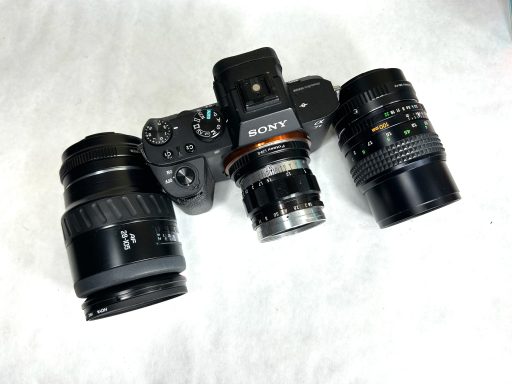
Beyond testing, I will use the Sony A7 II for some VMLP user reports. Often, I like to use 100 ISO film when reviewing lenses, and many times I have had to postpone an outing because it was too cloudy. Of course, I could carry a tripod, but that would be cumbersome. Since many of my outings are spur-of-the-moment, tripods are out. Using the Sony allows me to shoot at 800 or 1200 ISO with no degradation in image quality. In addition to removing light level as a limiting factor, the flexibility of being able to shoot three lens mounts on a single camera is a major plus. When using film, some days I go shooting with a Maxxum 5 with a 28mm f/2, an X-700 with a 100mm f/2.5, and a Canon P rangefinder with a 50mm lens. While I like shooting with multiple cameras, some days I simply want to use the lenses. Having the Sony A7 II lets me use one camera and still use all three lenses.
Aside from testing and having less gear to manage, there are experiments I hope to do that would burn through expensive film. For example, I want to try all ways of doing macrophotography—extension tubes, reversing rings, close-up filters, and macro lenses. I still want the final results on film, but prefer making mistakes on digital. Film also has an extended turnaround time. At present, conducting macro experiments with film has a turnaround time of about 3 weeks. After development, I’m finding that obtaining the best scans requires a couple of weeks of letting the negatives flatten under a few books. I learned that lesson last summer.

There was a set of UFX 400 negatives I deemed unusable after their initial scan. I placed those negatives, along with four other sets, under a stack of books and got busy with other projects for almost 4 weeks. When I scanned the other negatives, they produced sharp images. Thinking I had nothing to lose, I decided to rescan a few frames of the UFX negatives—all images were sharp. Remember, to my eye, the negatives had looked flat before. So now, I routinely expect to set aside time to completely flatten negatives before scanning. In any case, using film makes it challenging to conduct experiments that require quick turnarounds. Full-frame mirrorless allows me to experiment freely.
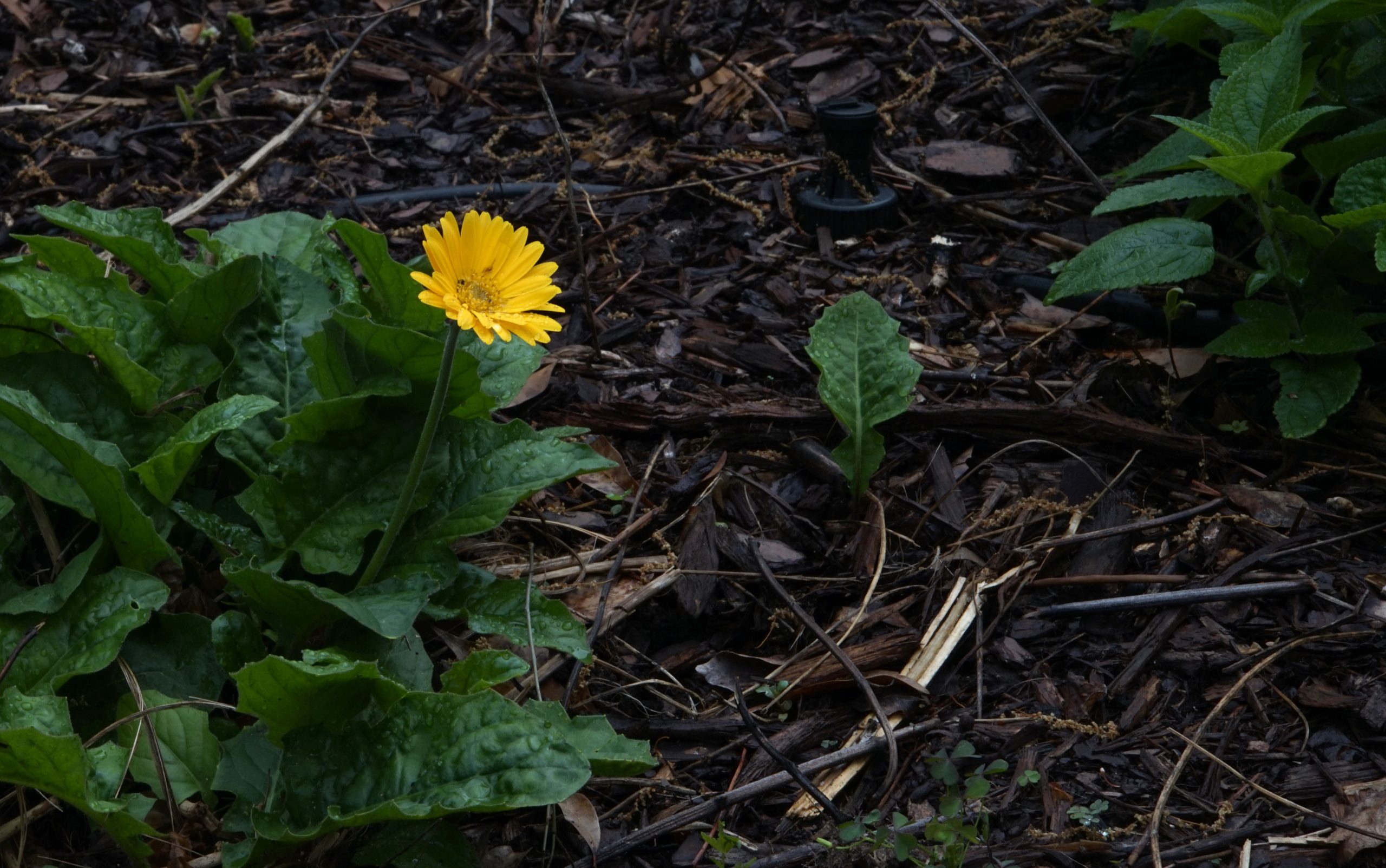
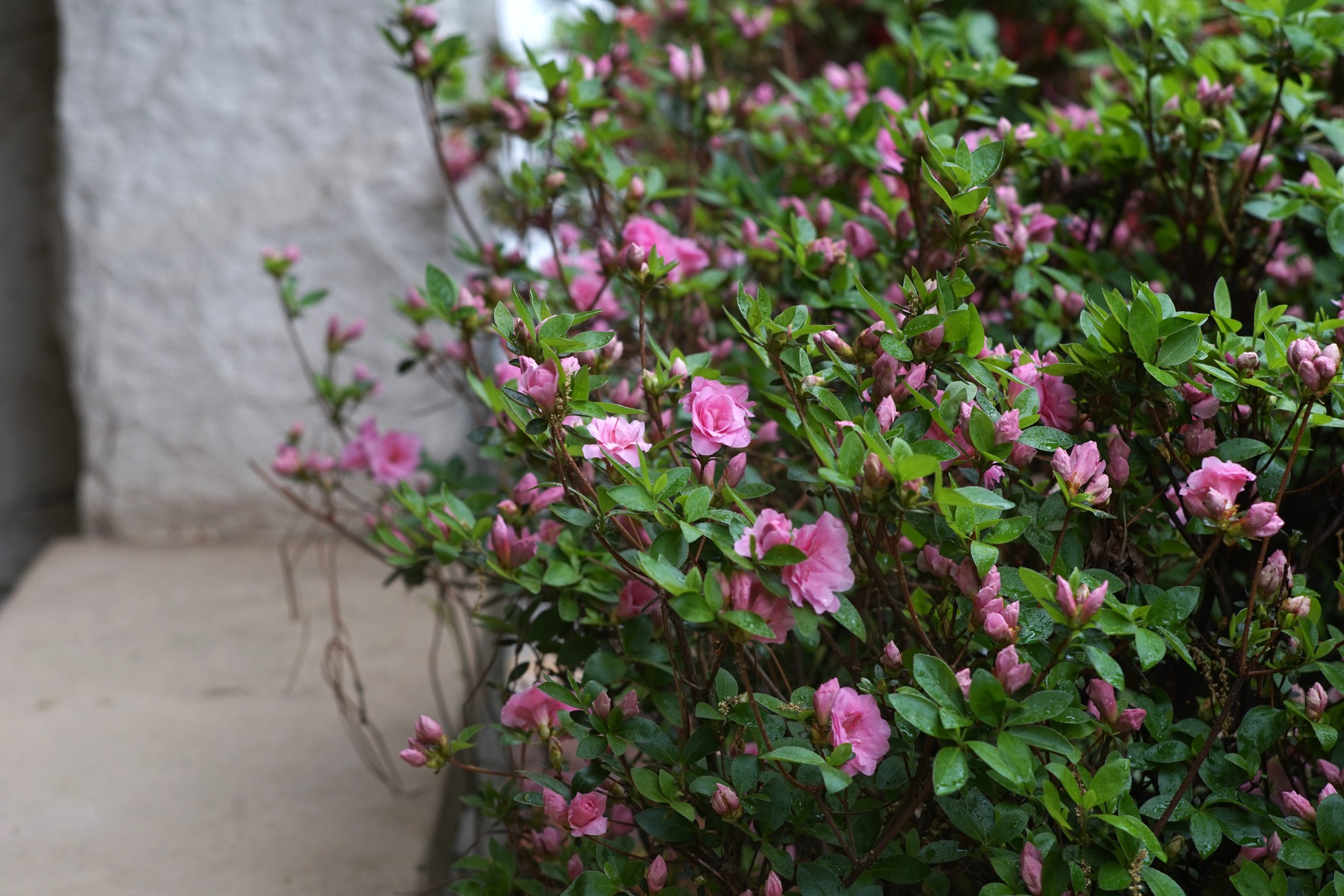
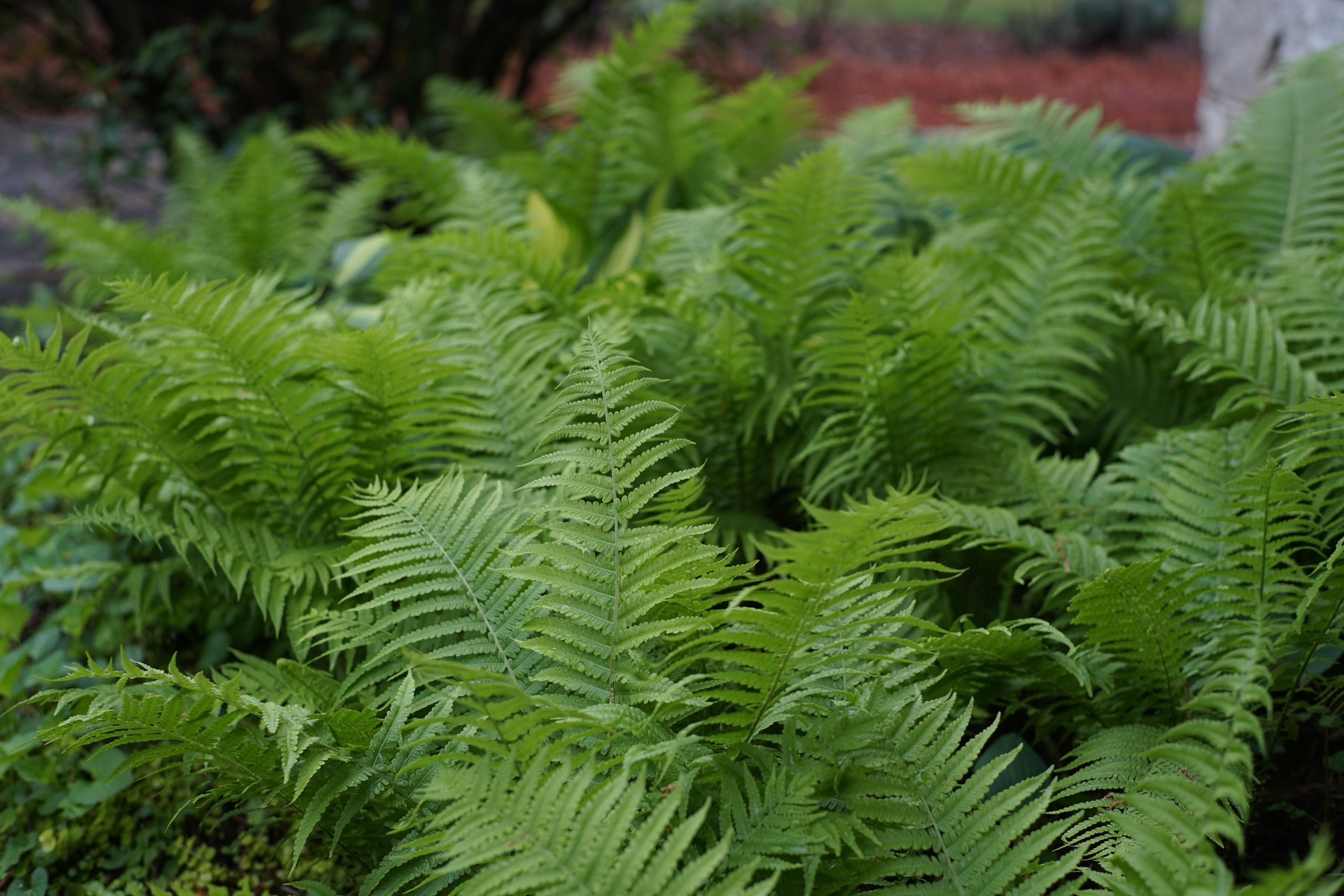
I am most eager to see how my small collection of LTM lenses performs. Two years ago, I did a side-by-side comparison of the Minolta Super Rokkor 45mm f/2.8 and 50mm f/2.8, and the Canon Serenar 50mm f/1.9, using Portra 400 and a tripod. Those results were pleasing and surprising for such old lenses. Recently, while playing around, I grabbed the Minolta Super Rokkor 50mm f/2.8 (said to be the worst of Minolta’s 50mm LTM lenses) to test the newly arrived LTM adapter. Here are two images made with the 50mm f/2.8.
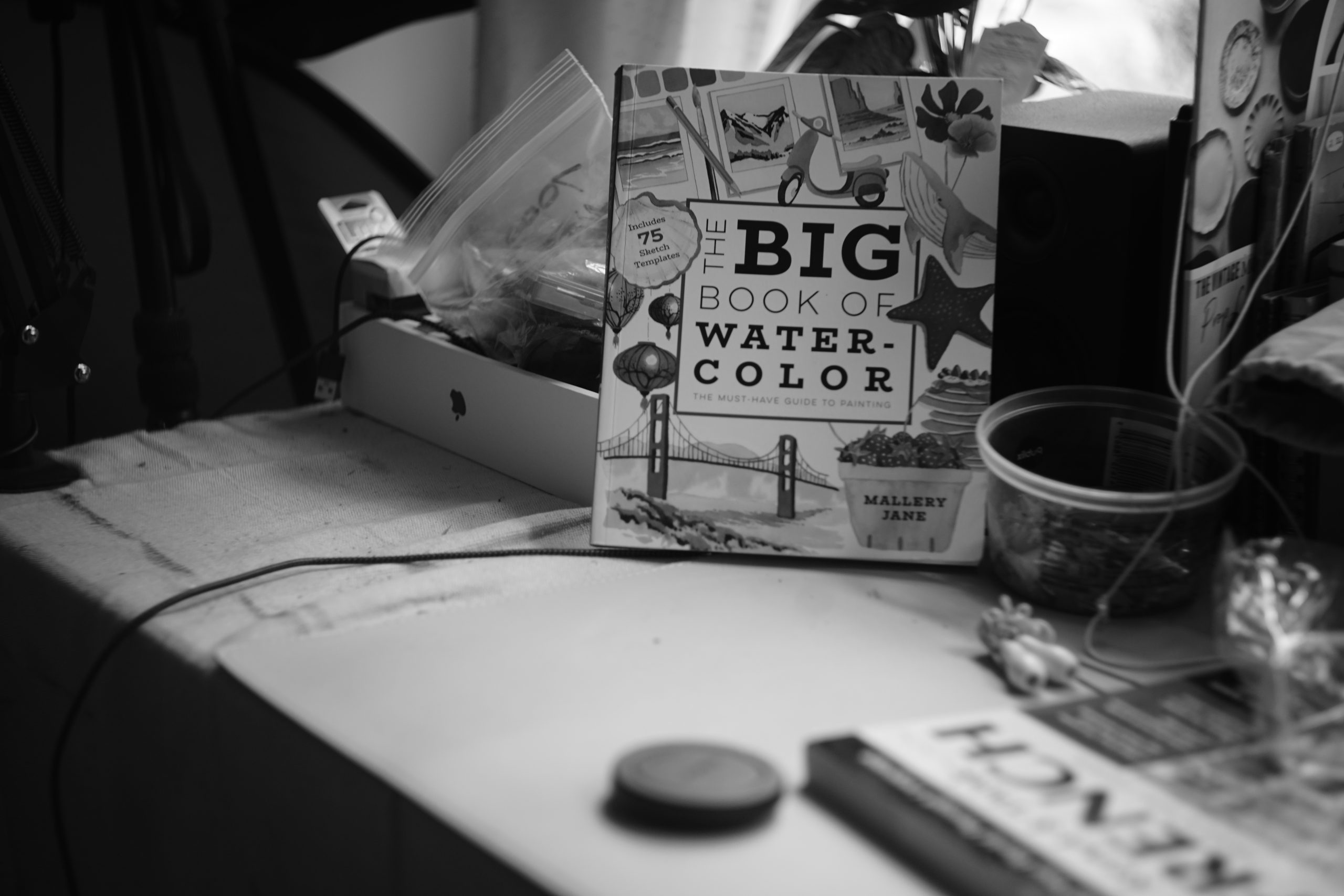

The first is shot wide-open at f/2.8 (at the minimum focus distance); the second is wide-open, with a Minolta Luminance Meter No. 122 Close-up filter attached. I was shocked at the surprisingly good images it delivered on the Sony’s 24 MP sensor. Even with my limited usage, I am very happy with this camera!
Now that my wish list is empty, I can turn my full attention to other matters. And just in time too—it’s gardening season !