

The 50mm focal length is a mainstay of photography. Budding photographers are advised to get a 50mm lens as their first purchase. Leica Thread Mount (LTM) rangefinders offered 50mm lenses before SLRs existed. And when SLRs arrived in the late 1950s, 50mm lenses were among the very first lenses released. Since 50mm lenses have a field of view similar to normal human vision, they are often referred to as normal lenses. Starting with the release of the Minolta SR-2 in 1958, Minolta has released multiple normal lens variations with focal lengths ranging from 45mm to 58mm and maximum apertures ranging from f2.0 to f1.2. Everyone seems to have at least one normal lens.
As best I can recall, with maybe one exception, all of my 50s came as part of a set. Looking through my collection, I find the Auto Rokkor (AR) 58mm f1.4/1.8, MC Rokkor 55mm f1.7, MC Rokkor 58mm f1.2 PG, MC Rokkor 58mm f1.4 PF, MC Rokkor 50mm f1.4 PG, MC Rokkor 50mm f1.7, MD Rokkor 45mm f2, MD Rokkor f1.4/1.7, MD 50mm f1.4/1.7/2.0, and AF 50mm f1.4/1.7. Of these, a few are often praised — MC Rokkor 58mm f1.2 PG, MC Rokkor 58mm f1.4 PF, MC Rokkor 50mm f1.4 PG, and MD Rokkor 45mm f2. The 58 mm f1.4 PF is known for its bokeh, and the 58mm f1.2 PG, 50mm f1.4 PG, and 45mm f2 are known for their sharpness (though some say the plain MD 50mm f1.4 is the sharpest fifty). That makes a total of 15 lenses with only four achieving some level of celebrity.
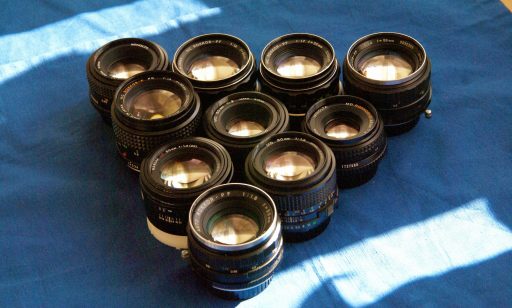
Typically, I walk around with a zoom—AF 35-70mm, AF 28-105mm, MD Zoom 28-85mm, or MD Rokkor 100mm f2.5. Except for the AF 50mm macro, I have not spent much time using 50mm lenses. However, in moving ahead with VLMP user reports, it seemed wrong to completely leave out normal lenses. At one point, it seemed fitting and proper to review only lenses with an aperture of f/1.4 or larger. Then I recalled that the AR 55mm 1.8 was released with the SR-2, making it a milestone. While the 45mm f2 was released as a cheap kit lens, it has gained a following. Phillip Reeve likes the MC Rokkor 55mm f1.7 PF, and gives it a nod. It seemed wrong to use and report on only four of these lenses while ignoring the rest. Yet, since there are so many, doing a full report on each would require too much time.
As a compromise, I decided to do brief reports on each. When feasible, I will shoot each using a camera from the appropriate generation. These will be VLMP “Fab 50” posts, consisting of a brief history, no more than 10 images, and my impression of the lens. Here are the expected pairings.
Camera/ Lens Pairings
– Auto Rokkor 55mm f1.8 — (SR-2)
– Auto Rokkor 58mm f1.4 — (SR-3, SR-7)
– MC Rokkor 58mm f1.4 PF, 55mm f1.7 PF — (SR-T 102, SR-T 202)
– MC Rokkor 50mm 1f.4 PG, MC Rokkor 50mm f1.7 PF — (XE-7, XE-5, XK)
– MD Rokkor 50mm f1.4, 50mm f1.7 — (XD11, XD5)
– MD Rokkor 45mm f2.0 (XG-7)
– MD 50mm f1.4, 50mm f1.7, 50mm f2.0 — (X-700, X-600, X-570)
– AF 50mm f1.4, 50mm f1.7 — (Maxxum 7000, 9000)
The Fab 50s arm of the VMLP will allow me to become better acquainted with Minolta’s normal lenses and to use cameras that have not been touched in a while. Expect the first Fab 50s post in a few weeks.


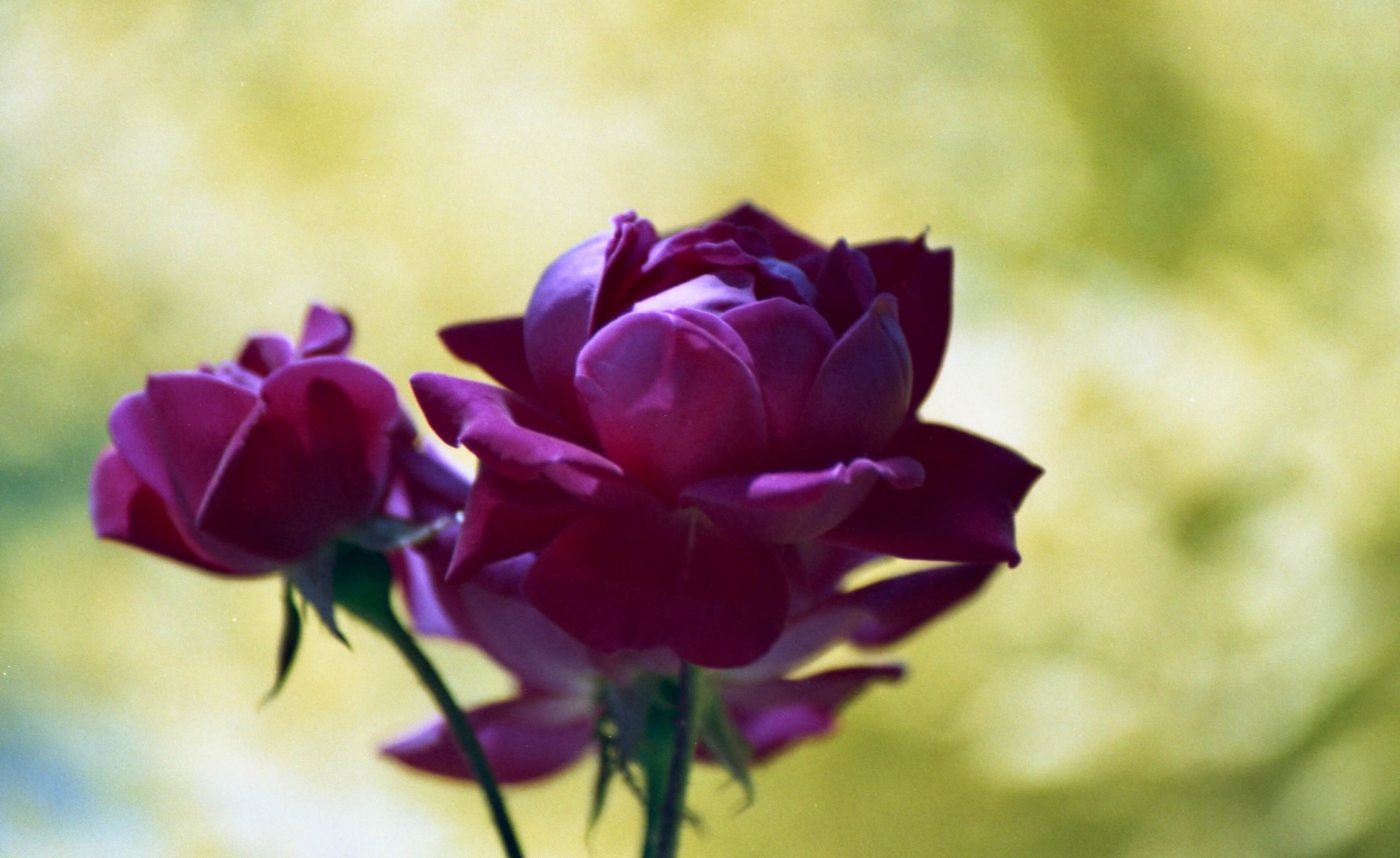
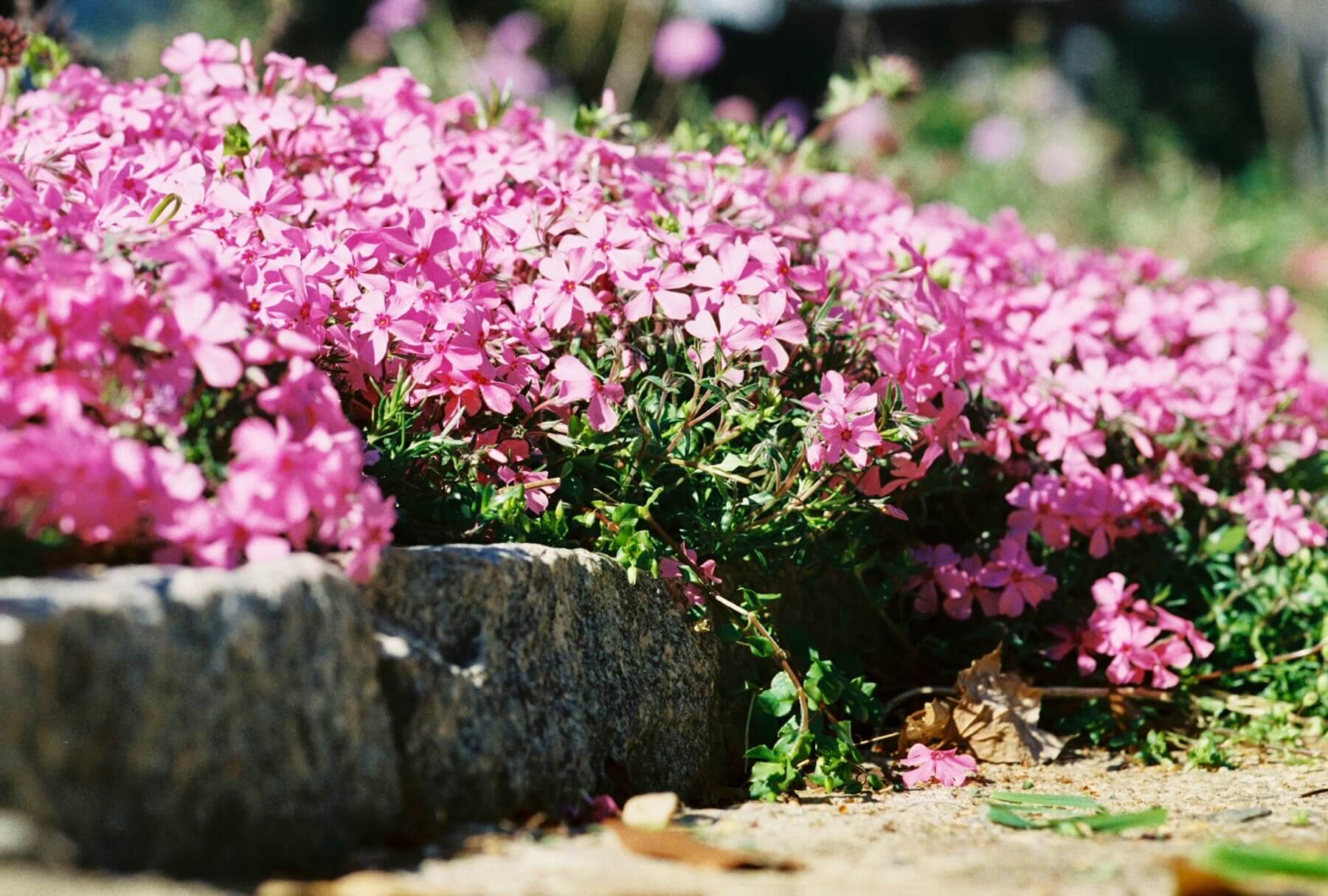


I think the celebrity status of the lenses depends on where you look. Like anything, echo chambers develop where specific things get more attention and reinforcement. For me, like a small group of others, the 55mm f/1.7 is the lens with my favorite rendering. Images from that lens have a different visual signature; it has a combination of great sharpness, great colors, and lovely bokeh. The images are just lovely. I use it for film, as well as adapted to digital, and in all cases it makes my favorite images. It is more than sharp enough to perform well on a Micro Four Thirds digital camera with 20MP sensor, which is a pretty demanding test due to the very small pixels of that sensor. The beautiful bokeh (and notably gentle focus transition) comes from its somewhat less common optical design; it is an improvement on a Double Gauss that gives more degrees of freedom to the optical designer. There are normal/standard lenses of similarly niche design and roughly similar specs in most systems, like Pentax. In all of those systems, there is likewise a small fan club who’s convinced it is outstanding among its peers. For me, the various artifacts of lenses like the 58/1.4 can ruin photos by producing unpleasant colors, fringing, and distractions especially in out-of-focus areas, but the 55/1.7 never does, it is a reliable performer for me. I do like some of the lenses with “worse” or “harsher” rendering at times, like the 58/1.4, because when used skillfully they can produce really eye-catching images especially in the bokeh (e.g. flower photos with texture in the background) but I have to use them carefully, lest the effect go beyond surprising into garish. I look forward to the new series and what you think of the lenses!
Thanks for such a detailed comment. As I mentioned in the post, I have not made a lot of use of normal lenses. Since my main subject has been flowers and the garden, macro lenses and zooms have been my go-to lenses. However, since I have a box of normal lenses, it seems like a good area to explore. Bokeh is one of those topics that gets a lot of focus, but only occasionally catches my attention. The Minolta MD 50-135mm wide open has noisy, flittery bokeh that I find very distasteful. I have used the MC Rokkor 55mm 1.7 only once for a few frames. Looking at my copies I have two different versions–one with hills and valleys and one relatively flat.
My reports on these lenses will be from the viewpoint of one wanting decent images of flowers and city scenes. It will be fun to see how they perform.
Then the extension tube set might be mandatory! Or just a screw-on close-up filter. Minolta made two-element achromat close-up filters that are unusually good quality. Looking forward to the photos!
I have complete sets of AF and manual Minolta extension tubes, although I have never used them. I did try my Pentax 645 tubes and was very happy with the result.