The MD Zoom 50-135mm is part of Minolta’s zoom boom of the late 70s that began with the arrival of the XD/XG camera models. Between 1978 and 1985, 16 zooms were released, ranging from the 24-35mm to the 100-500mm. Many of these zooms are rather expensive and seem not to have sold in large numbers, so they are relatively difficult to find in the US. Of course, that means I decided to hunt down as many as possible to try them.
This MD Zoom 50-135mm arrived in 2020, and it has sat in my lens container for almost five years before finally having its day in the sun. For most of the time I’ve owned this lens, there were few reviews of it on the web. Lately, I’m discovering more, and the consensus varies from okay to pretty good. Released initially in 1978 as a Rokkor-X version, it was among the first wave of MD zooms. This version is from the last model, the MD III, released in 1981.
Background
The official Minolta Price List from February 1, 1982, lists a price of $314.00 (US Dollars) for the lens version discussed here.
Technical Specs
This is a somewhat weighty lens, weighing in at 480g (~ 17 oz). The minimum focus distance (MFD) is 1.5 m (~ 5 feet), and it accepts 55mm filters. A separate hood is available. The aperture range is f/3.5 to 32, formed with six aperture blades. This is one-touch zoom, but it does not seem to be par focal.
Buying
Four years ago, the 50-135mm lenses were relatively scarce. Today, there seem to be a few available on eBay at all times.


Shooting Experience
The 50-135mm zoom range is not one I’m accustomed to shooting. Lately, I have been using 35mm primes, the Minolta AF-C (35mm f/2.8) or a mid-range zoom 35-70mm or 28-85mm. Having access to 135mm took a while to feel right. Since this is an MD lens, a Minolta X-700 and an XD were used. The first thing that struck me was the weight of the lens—it weighs as much as the X-700 and is just a few ounces less than the XD. Also, it is significantly larger than the MD Zoom 28-85mm and the MD Zoom 35-70mm.
Both cameras have clear viewfinders, so focusing was straightforward. Since my goal was to test the full FL range at various apertures, I decided to shoot some shots inside using a tripod and others on the streets of Midtown. Although I was using 400 ISO film (XP-2 and Portra 400), there were instances where low light made camera shake an issue, because at 135mm, a shutter speed above 1/125 is best.
One-touch zooms are beginning to grow on me. Focusing and zooming are faster, which allows me to concentrate better on composition. Last summer, I used the 100mm f/2.5 quite a bit, so I was expecting good things from this 50-135mm at that FL. I’ve tried 135mm primes and find that FL takes a while to get used to, as does sub-28mm FL.
During my test of this lens, I debated whether it would be useful to run specific sharpness tests—nothing technical, just something to help me know how to best use the lens. I have done this in the past using a light box, with good results. I’m embarrassed to say the light box is folded up and put away, and not having used it for a couple of years, I forgot I had it. Future user experience reports will include basic sharpness assessments. I’m also considering a Sony a7 II, so that I have a good idea of sharpness before using film.

Images
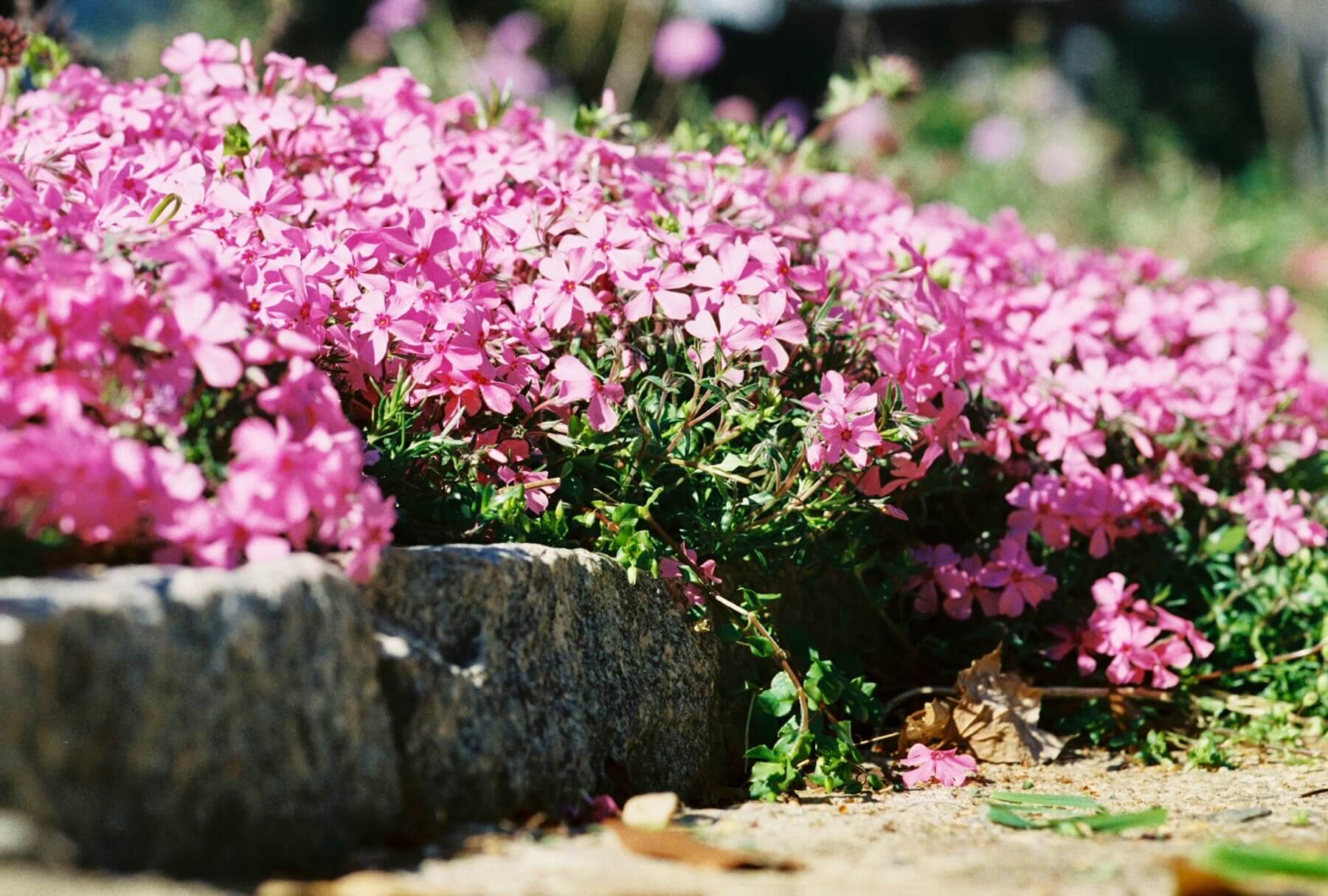
Black-and-white images are Ilford XP-2, and color images are Kodak Portra 400. Both were processed using the CineStill 2-Step Color kit. All images were scanned using the Epson v600 and Epson Scan 2 software. I shot a few images at the max aperture, but only one wasn’t ruined by a wind gust (that is the tiny bust seen with the noisy bokeh).


Impressions
Reviews of this lens range from enthusiastic (1978, MD II), to okay (1981, MD III), to not-so-good (1981, MD III). My copy (1981) is capable of producing sharp images, and the sweet spot for sharpness seems to be between f/5.6 and f/8—shots at f/11 were not as crisp. This lens flares easily (I should have brought the hood along).
Perhaps there is a significant difference between the 1978 and 1981 versions. Because of the 40+ images I made, only about 30 were as sharp as I would have liked, and I was very careful with my focusing and scanning.
Would I recommend it? As a portrait lens, it may work because clinical sharpness seems to be less important in those situations. However, if one really needed access to the 135mm FL, the MD primes are quite good and not too expensive. The AF 135mm f2.8 is an excellent lens that I find is great for flower images, so I am not averse to this FL. Zooms are supposed to offer convenience as a trade-off for speed. But this lens is soft below f/5.6 and above f/11, and it is larger than the primes it might replace—50mm, 100mm, 135mm. My experience with this lens matches that of others who have used the MD III version—it’s just okay. Perhaps, a few hours with it and the Sony a7 II will change my mind…
Update: I tried this lens on a Panasonic Lumix G1 with adapter and shot a few frames at f/3.5 and 1/125 or higher. Even at f3.5 most images were very good if not tack sharp. Camera shake must have been the reason for the softness in some film frames.